MOVE SMART. RECOVER DAILY.Make recovery part of your day.
THE FASC GUIDE
Slow down.
Find your body's rhythm.
Start with one area and one movement.
Follow the illustrations and adjust your support to keep each roll gentle and comfortable.
04 MOVEMENTS / ONE FASC
UPPER BACK
Movement illustration · Adjust to your range of motion
01 / Upper back
Upper-back rolling
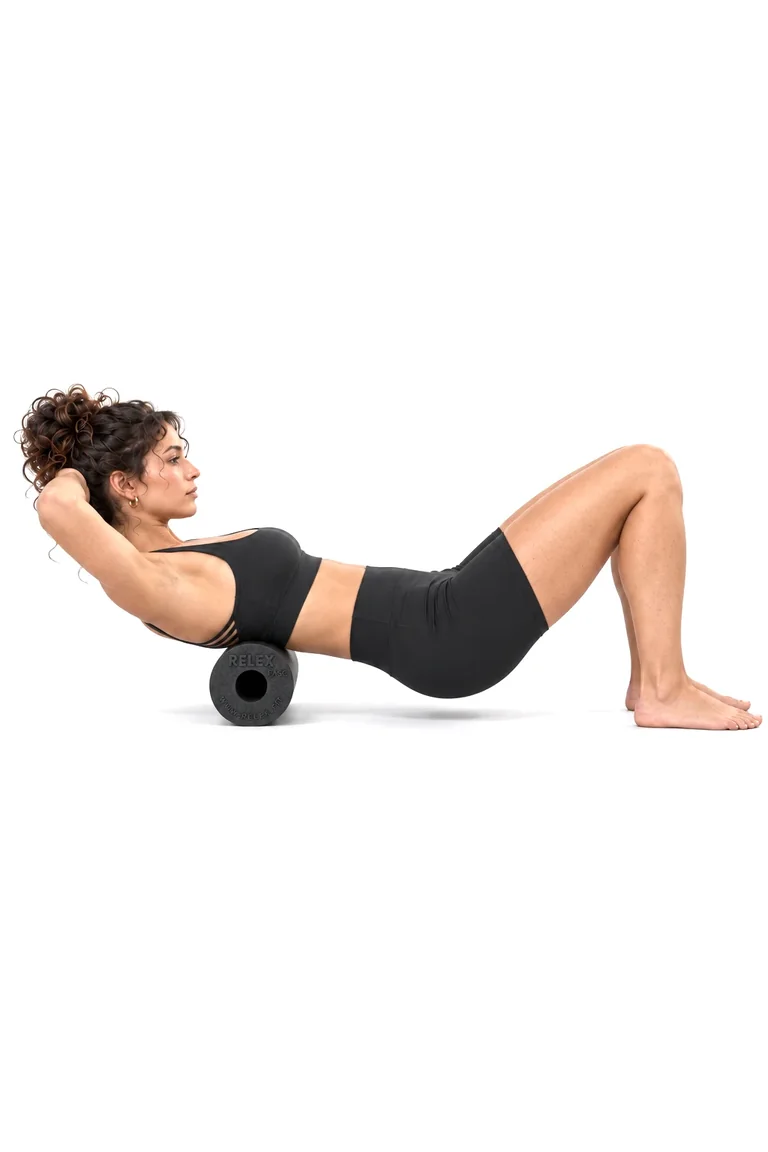
Bend your knees and plant your feet. Place the roller under your upper back and gently support your head with your hands.
Use your feet to move your body slowly, rolling over a small area of your upper back.
Breathe naturally and keep the pressure comfortable. Avoid your neck and lower back.
A timer to help you slow down
The timer is a pacing guide. Pause anytime; there is no need to complete all 30 seconds.
Listen to your body.
Start with light pressure and small movements, breathing naturally. Avoid joints, prominent bones, wounds and broken skin. Stop immediately if you feel sharp pain, numbness or significant discomfort. If you have an acute injury, ongoing pain or are receiving related treatment, consult a qualified healthcare professional first.
FOAM ROLLING, STEP BY STEP
How to use a foam roller: four movements, step by step
Read the steps first, then adjust support and pressure to how your body feels. Use the interactive illustrations and optional timer above.
01 / UPPER BACK
Upper-back rolling
Bend your knees and plant your feet. Place the roller under your upper back and gently support your head with your hands.
Use your feet to move your body slowly, rolling over a small area of your upper back.
Breathe naturally and keep the pressure comfortable. Avoid your neck and lower back.
There is no need to rush to the next thing. After training, slow your breathing and give your body a little space to settle.
Start with a familiar area
Choose a muscle area you have just used, with no pain or injury. Position FASC securely and use your hands and feet to manage your weight, keeping the pressure comfortable.
Keep it gentle
Roll slowly in small movements. Breathe freely and do not seek out pain. Use the page timer as a pacing guide, pausing or stopping whenever you need to.
Leave room for next time
Get up slowly when you finish and notice how you feel. You do not need to cover every area. A comfortable session is a good way to close out today's training.
After a long sit, find a different rhythm.
After a long stretch of work or study, start by leaving your seat, walking around and changing position. Foam rolling can be one part of your time to unwind.
Make a little space
Choose a stable, non-slip surface and a suitable mat. Clear away anything that could restrict your movement and make sure your hands and feet can support you securely.
Start with one movement
Follow the upper-back or calf illustration, using light pressure and breathing naturally. Adjust to your own range of motion without forcing yourself into the pictured position.
Keep changing position throughout the day
After your break, remember to keep getting up and moving. FASC does not replace regular movement. Consult a qualified healthcare professional if pain persists.
Small rituals. A little care, repeated.
A habit does not need to start with a big goal. A short, comfortable moment of recovery within your usual day can help you find a rhythm you want to return to.
Choose a natural moment
After training, during a work break or before you rest. Choose a convenient, quiet time when you can pay attention to how your body feels.
Make it easy to start
Keep FASC somewhere dry and easy to reach. Begin with one familiar movement. You never need to tolerate discomfort just to finish the timer.
Let your body guide you
Today might call for lighter pressure. Tomorrow might be a rest day. Caring for yourself does not need to become another task to complete.